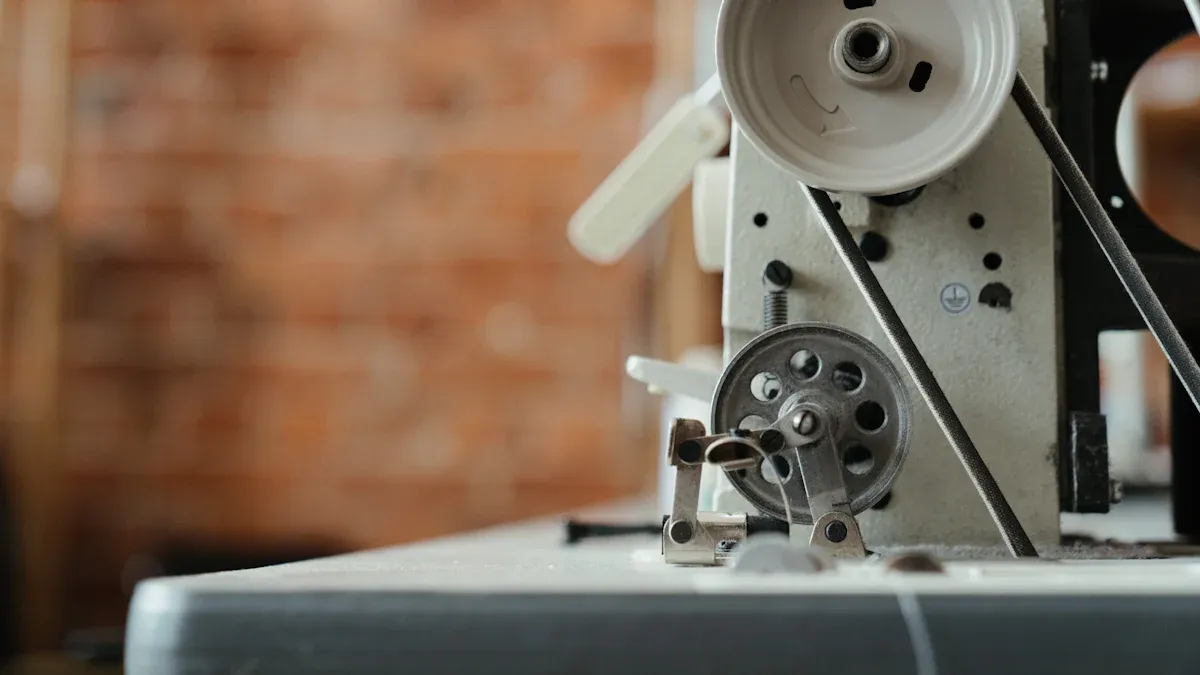
You use a sewing machine motor to change electric energy into movement. The motor makes the parts of your sewing machine move. It helps the needle and fabric move easily. In an electric sewing machine, the motor needs to stay strong. It also needs to stay cool. Tough die-cast aluminum housing keeps the motor safe from harm. This helps the motor work for a long time.
Key Takeaways
A sewing machine motor changes electric energy into movement. This makes the needle and fabric move for smooth sewing.
Cleaning the motor and checking belts is important. These steps help your sewing machine work well and last longer.
There are different motor types, like clutch, servo, and computer-controlled motors. Each type has special benefits for different sewing jobs.
Knowing the parts of the motor, like the armature and brushes, helps you fix problems. It also helps you take care of your sewing machine.
Sewing machines have safety features, like overload protection. These features stop damage and keep you safe during long sewing times.
Sewing machine motor components
When you open a sewing machine, you see many parts. These parts help the motor work. Each part does something important. You should know how these parts work together. This helps your sewing machine run well.
Armature and electromagnetic coils
The armature is in the middle of the motor. Wires are wrapped around the armature. These wires are called electromagnetic coils. When you turn on the power, the coils make a magnetic field. This field pushes and pulls the armature. The armature starts spinning. Spinning makes rotary motion. The spinning armature moves other parts. It helps the needle and feed dogs move.
Tip: Keep your motor clean for best results. Dust can block the coils. This can slow down the motor.
Brushes and commutator
Inside the motor, you find brushes and a commutator. The brushes touch the commutator. The commutator looks like a ring with sections. When the armature spins, the brushes slide over the ring. This lets electric current go into the coils. The brushes keep the movement smooth. Friction happens when brushes rub the ring. You should check the brushes often. If brushes wear out, your sewing machine may not work right.
Here is a simple table that shows what each part does:
Component | What It Does | Why It Matters |
Armature | Spins inside the motor | Makes rotary motion |
Electromagnetic Coils | Make magnetic fields | Start the spinning action |
Brushes | Carry electric current | Keep movement smooth |
Commutator | Switches current direction | Controls coil power |
Aluminum alloy motor housing
A strong housing protects the motor. Many parts sit inside this housing. Aluminum alloy motor housing keeps the motor safe from bumps and heat. This makes your sewing machine last longer. Altop Precision Die Casting CO., Ltd. makes good aluminum alloy motor housings. Their die-cast aluminum parts keep your sewing machine strong and cool. You can trust these housings to protect the motor and electric parts.
Note: Good motor housing helps your sewing machine handle heavy use. You do not have to worry about damage or overheating.
Basic working principle of sewing machines
You use a sewing machine motor to turn electric energy into movement. When you press the foot pedal on your electric sewing machine, you send electric power to the motor. The motor starts spinning. This spinning action is the first step in the basic working principle of sewing machines. Universal motors work well in sewing machines because you can run them on both AC and DC electric power. You get reliable performance and smooth operation.
Electricity to mechanical motion
You control the sewing process by sending electric power to the motor. The motor spins quickly. This rotary motion needs to change into the up-and-down movement that drives the needle mechanism. The motor connects to a system of belts and gears. These parts transfer the spinning force to the crank mechanism. You see the needle move up and down as a result. The bobbin and shuttle mechanism also work together with the needle to form stitches. You get neat and strong seams every time.
Tip: If your sewing machine slows down, check the electric connections and make sure the motor spins freely.
Crank mechanism and needle movement
You watch the crank mechanism change the spinning motion into straight movement. The crank attaches to the needle bar. When the crank turns, it pushes the needle bar up and down. This action lets the needle pierce the fabric and pull the thread through. The stitch mechanism works with the needle to lock the thread in place. You get even stitches and smooth lines. The crank mechanism makes sure the needle moves at the right speed for each part of the sewing process.
Part | What It Does |
Crank Mechanism | Changes rotary to linear |
Needle Mechanism | Moves needle up and down |
Stitch Mechanism | Forms and locks stitches |
Feed dogs and fabric control
You see feed dogs under the needle plate. These small metal teeth move the fabric forward after each stitch. The motor powers the feed dogs through gears and levers. You get steady fabric movement and even spacing between stitches. The feed dogs work with the needle mechanism to keep the fabric flat and prevent bunching. You control the speed and direction of the fabric by adjusting the settings on your sewing machine. This teamwork between the motor, feed dogs, and needle mechanism gives you precise control over every part of the sewing process.
Note: Clean the area around the feed dogs often. Dust and lint can block their movement and affect your sewing results.
Types of sewing machine motors
Sewing machines use different kinds of motors. Each motor lets you control sewing in its own way. Learning about these motors helps you pick the right sewing machine.
Clutch motors
Clutch motors are found in many mechanical sewing machines. You turn them on with a switch. The motor keeps running fast, even if you do not press the pedal. When you press the pedal, the clutch connects the motor to the needle and stitch mechanisms. You get quick power, but the motor is loud. Clutch motors are good for tough sewing jobs. You can sew thick fabric and finish big projects fast. You change the speed by pressing the pedal harder or softer. Some people think it is hard to sew slowly with clutch motors.
Tip: If you need strong power for long sewing, clutch motors help you finish your work.
Servo motors
Servo motors are quiet and smooth. They use electricity only when you press the pedal. The motor stops when you stop sewing. This saves energy and keeps the machine cool. You can easily control the speed. Servo motors let you sew slow or fast with good control. Many electric sewing machines use servo motors for better sewing. You also get less shaking and less noise. This makes sewing more comfortable.
Motor Type | Noise Level | Speed Control | Energy Use |
Clutch Motor | High | Moderate | High |
Servo Motor | Low | Excellent | Low |
Computer-controlled motors
Modern sewing machines use computer-controlled motors. You set the speed and stitch type with buttons or a screen. The computer controls the motor, needle, bobbin, and shuttle mechanisms. You get very neat stitches every time. The computer lets you save patterns and repeat them easily. You can sew hard designs without much work. Computer-controlled motors help you finish detailed projects with great quality.
Note: If you want to try embroidery or fancy patterns, computerized sewing machines give you the best results.
Motor and sewing machine parts
Interaction with belts and gears
You see belts and gears inside your sewing machine. These parts connect the motor to the needle mechanism and the bobbin and shuttle mechanism. When you press the foot pedal, the electric motor spins. The belt transfers this spinning motion to the gears. The gears then move the needle mechanism up and down. You also notice that the bobbin and shuttle mechanism works at the same time. This teamwork helps you make strong stitches.
Tip: Check the belts for cracks or wear. Replace them if you see damage. This keeps your sewing machine running smoothly.
Synchronization and speed control
You control the speed of your sewing machine with the foot pedal. The motor responds quickly to your touch. The gears and belts help keep all parts moving together. Synchronization means the needle mechanism and the bobbin and shuttle mechanism work at the right time. You get even stitches because the motor, gears, and belts stay in sync. If you use a computerized sewing machine, you can set the speed with buttons or a screen. This gives you more control over your sewing projects.
Control Method | How You Use It | Benefit |
Foot Pedal | Press with your foot | Quick speed changes |
Computerized Panel | Push buttons or touch | Precise speed settings |
Safety and overload protection
You want your sewing machine to stay safe while you sew. Many electric motors have safety features. Overload protection stops the motor if it gets too hot or works too hard. This protects the motor and other parts from damage. You should let your sewing machine rest if you sew for a long time. Some machines have warning lights or automatic shut-off. These features help you avoid accidents and keep your sewing machine in good shape.
Note: Always unplug your sewing machine before you clean or check the motor. Safety comes first.
You learned how the motor powers your sewing machine and moves its main parts. Strong die-cast aluminum housing protects the motor and keeps it working well. When you choose a sewing machine, look at the motor type and housing material.
Clean the motor area often.
Check belts and brushes for wear.
Let the machine rest if it gets hot.
Tip: Regular care helps your sewing machine last longer and work better.
FAQ
How do you know if your sewing machine motor needs replacement?
You hear strange noises or see the motor slow down. The needle may not move smoothly. You notice burning smells or the motor gets very hot. You should check with a technician.
What is the best way to clean the motor area?
You unplug the sewing machine. Use a small brush to remove dust. Wipe the area with a dry cloth. Avoid using water or liquid cleaners near electric parts.
Can you use any motor housing for your sewing machine?
You need a housing that fits your motor size and type. Aluminum alloy motor housings offer strong protection and help keep the motor cool. Choose a quality housing for better performance.
Why does the motor overheat during long sewing sessions?
You run the motor for a long time without breaks. Dust blocks airflow. The motor works too hard on thick fabrics. Let the machine rest and clean the vents often.
How do you control the speed of your sewing machine?
You press the foot pedal to change speed. Some machines have buttons or screens for speed control. Computerized models let you set exact speeds for different tasks.