The automotive and motorcycle industries are undergoing rapid transformation. Lightweighting mandates, electric vehicle (EV) adoption, and high-performance requirements heavily drive this shift. Automakers constantly seek innovative manufacturing methods to drop vehicle mass. They must achieve this weight reduction without ever sacrificing passenger safety or structural rigidity.
Sourcing reliable structural and engine components requires moving far beyond basic vendor selection. You must carefully evaluate technical capability, production scalability, and rigorous quality control. A simple "print to part" mentality no longer works for highly engineered mobility solutions. Modern supply chains demand proactive engineering and deep material expertise to prevent catastrophic failures down the line.
Selecting the right Die Casting Service and optimizing mold design early in the process dictates your production efficiency. It tightly controls the ultimate cost-per-part and guarantees final product integrity. We will explore how proper material selection, advanced tooling strategies, and rigorous supplier validation can safeguard your next major manufacturing program.
Key Takeaways
Material selection (Aluminum, Zinc, Magnesium) must align strictly with the part's thermal, weight, and structural requirements.
Upfront investment in precision die casting mold design reduces long-term tooling costs and minimizes porosity defects.
Evaluating a die casting partner requires looking past unit cost to assess IATF 16949 compliance, secondary machining capabilities, and supply chain stability.
Design for Manufacturability (DFM) is critical for scaling from prototype to high-volume automotive and motorcycle runs.
The Business Case: Framing Success in Mobility Manufacturing
Mobility manufacturing demands a strict balance between high-end performance and aggressive cost control. Choosing the right metal forming process dictates your market competitiveness.
The Lightweighting Imperative
Modern vehicle engineering revolves almost entirely around weight reduction. Heavy vehicles consume more fuel and handle poorly. Die Casting directly supports fuel efficiency in traditional internal combustion engine (ICE) vehicles. Removing just ten kilograms from a chassis noticeably improves mileage and lowers emissions.
This imperative becomes even more critical for the EV sector. Battery packs add massive weight to vehicle platforms. High-strength-to-weight ratios found in cast aluminum and magnesium counteract this battery burden. Lighter structural components directly extend EV driving range. They relieve unnecessary strain on the electric motors and battery reserves.
Volume vs. Unit Cost Economics
High-volume automotive and motorcycle production requires massive upfront tooling investments. Premium steel molds cost tens of thousands of dollars to engineer and cut. However, the break-even logic strongly favors this manufacturing process over time. Once the tool enters the machine, cycle times drop to mere seconds.
This speed creates incredible economies of scale. The unit cost drops dramatically over hundreds of thousands of cycles. Machining billet aluminum makes sense for ten prototypes. It fails completely when you need fifty thousand identical transmission housings. High-pressure casting amortizes the initial tooling cost across massive production runs.
Consolidation of Assemblies
Engineers historically bolted dozens of small brackets and plates together to form structural modules. This approach introduces multiple points of failure. It also requires extensive inventory management and manual labor. Today, we see a massive trend toward the consolidation of complex assemblies.
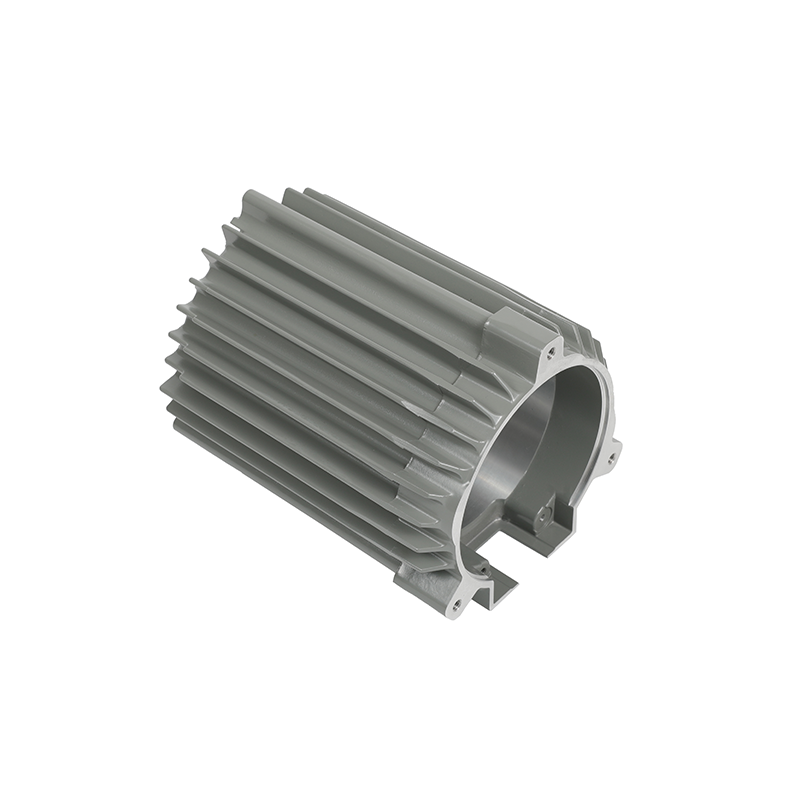
You can reduce overall part counts by casting multi-functional geometries into single components. For example, modern foundries routinely integrate stator housings and chassis sub-frames into unified structures. This eliminates secondary joining operations. It removes excess fasteners and structural adhesives from the assembly line.
Core Applications: Automotive vs. Motorcycle Requirements
Automotive and motorcycle platforms share basic metallurgical principles. However, they demand distinctly different approaches to component engineering and surface finishing.
Automotive Components
Automotive platforms rely heavily on hidden structural and powertrain components. These parts endure extreme conditions out of sight.
Structural & Powertrain: Engine blocks, transmission housings, and steering knuckles require extreme dimensional stability. They endure intense mechanical stress and high vibration over decades of daily use. A failed steering knuckle causes an immediate loss of vehicle control.
EV Specifics: Electric vehicles introduce new complexities. Battery enclosures and motor housings require exceptional thermal conductivity. They must rapidly dissipate heat to protect sensitive lithium-ion cells. Leak-tightness also becomes an absolute necessity. Liquid-cooled EV systems cannot tolerate micro-porosity. Coolant leaks easily cause catastrophic electrical shorts.
Motorcycle Components
Two-wheeled vehicles operate under completely different design constraints. Almost every functional part remains visible to the rider.
Aesthetic & Structural Balance: Designers must strike a perfect structural and visual balance. Swingarms, crankcases, and cylinder heads act as vital load-bearing structures. Simultaneously, they integrate directly into the motorcycle's overall aesthetic language.
Surface Finish Priorities: This visibility changes finishing priorities entirely. Motorcycle parts demand superior cosmetic finishes compared to hidden automotive internals. You cannot accept minor surface imperfections on an exposed frame or engine cover. Foundries must carefully control shot speeds and cavity temperatures. This ensures a flawless exterior ready for immediate powder coating or high-gloss polishing.
Material Selection: Trade-offs and Performance Metrics
Choosing the right alloy determines the success of your entire production run. You must balance thermal properties, physical weight, and long-term structural demands.
Aluminum Alloys (e.g., A380, A356)
Aluminum remains the undisputed global industry standard. Alloys like A380 and A356 provide incredibly high dimensional stability. They offer excellent natural corrosion resistance against road salts and weather. Aluminum proves optimal for high-temperature operating environments like engine bays and exhaust routing areas. It strikes the most reliable balance between raw material cost, component weight, and mechanical durability.
Magnesium Alloys (e.g., AZ91D)
When weight reduction becomes the absolute priority, magnesium steps in. Alloys like AZ91D serve as the ultra-lightweight choice. Magnesium weighs roughly thirty percent less than aluminum. It is best for structural parts where every single gram matters. Engineers specify magnesium for steering wheels, dashboard cross-car beams, and top-tier racing swingarms. However, magnesium requires specialized handling. Foundries must utilize shielding gases during melting to prevent dangerous flammability.
Zinc Alloys (e.g., Zamak series)
Zinc alloys dominate smaller, highly intricate applications. The Zamak series remains ideal for high-precision automotive components. Common applications include seatbelt mechanisms, door lock housings, and sensitive electronic enclosures. Zinc flows easily into extremely complex cavity shapes. It allows for incredibly strict tolerances. This highly fluid nature often eliminates the need for any secondary CNC machining.
Material Comparison Chart
Material Family
Common Alloy
Primary Advantage
Ideal Automotive/Moto Application
Aluminum
A380, A356
Balanced strength, cost, and thermal control.
Engine blocks, transmission cases, EV battery boxes.
Magnesium
AZ91D
Ultra-lightweight structure.
Steering wheels, cross-car beams, racing subframes.
The Critical Role of Precision Die Casting Mold Design
A successful manufacturing program begins long before molten metal enters a press. The upfront engineering phase fundamentally defines product quality.
Mitigating Common Defects
Advanced Die Casting mold design aggressively addresses structural weaknesses early. Proper gating and venting mitigate common industry defects. Gas porosity, shrinkage, and cold shuts ruin part integrity. If trapped air cannot escape the cavity rapidly, structural strength drops significantly. Engineers design overflow wells and vacuum channels to pull air out before the metal solidifies.
Thermal Management & Cooling Lines
Thermal management represents another crucial tooling element. Engineers design tooling to maintain highly specific die temperatures. Efficient internal cooling lines directly impact factory cycle times. Water or oil flows through these lines to extract heat consistently. Balanced thermal loads extend mold lifespan. Poor cooling causes warping, soldering, and premature steel cracking.
Simulation & Flow Analysis
Modern foundries never rely on guesswork. They utilize advanced software like MAGMASOFT prior to cutting any tool steel. Simulation programs accurately predict fill patterns and thermal behaviors. Software optimizes the entire gating system. It ensures smooth, uniform metal flow. Catching a turbulent fill pattern on a computer saves thousands of dollars in wasted prototype steel.
Tooling Longevity
You must carefully calculate tooling longevity. Buyers frequently balance initial mold steel costs against expected shot life. Premium H13 tool steel costs significantly more upfront. However, it easily handles the grueling volume demands of automotive manufacturing. Cheap steel deteriorates quickly under high pressure. This leads to costly mid-production tool repairs and missed delivery schedules.
Risk Mitigation and Quality Compliance in Production
Quality control in mobility manufacturing leaves absolutely no room for error. A single overlooked structural flaw can result in catastrophic highway failures and massive brand recalls.
Automotive-Grade Certifications
Partnering with a fully certified facility is strictly non-negotiable. IATF 16949 compliance guarantees robust liability protection and part traceability. It proves the manufacturer utilizes formalized continuous improvement systems. Certified foundries implement strict defect prevention protocols rather than simply sorting bad parts from good ones. They document every single process variable for future auditing.
Non-Destructive Testing (NDT)
Foundries must employ rigorous Non-Destructive Testing (NDT) protocols for safety-critical parts. Visual inspections cannot detect internal voids. X-ray inspection and CT scanning look deep inside the metal structure. They validate the internal integrity of steering knuckles and engine mounts. Dye penetrant testing highlights microscopic surface cracks. These methods spot hidden porosity long before the part reaches the assembly line.
Tolerance Realities
You must confront tolerance realities early in your program. Establish clear, verifiable assumptions regarding dimensional accuracy. Understand exactly what tolerances are achievable straight out of the mold. Compare these against features requiring dedicated CNC post-machining. Pushing tooling limits to avoid machining often causes high scrap rates. A balanced approach ensures steady production yields.
Common Mistake: Demanding aerospace-level tolerances on non-critical structural ribs. This unnecessarily drives up tooling complexity and maintenance costs. Always apply strict tolerances only where mating surfaces demand them.
Evaluating and Shortlisting a Die Casting Service Partner
Choosing a supplier determines your project timeline and ultimate product reliability. You need a structured framework to evaluate your foundry options properly.
Assessing Technical Depth
Look closely at their internal engineering team. Does the facility offer comprehensive in-house DFM assistance? Avoid partners who simply "print to print." A true manufacturing partner actively suggests geometric optimizations. They should modify wall thicknesses and add draft angles to improve part ejection.
End-to-End Capabilities
Supply chain consolidation saves tremendous time. Evaluate the necessity of a partner who handles multiple operations under one roof. True end-to-end facilities manage raw casting, precise CNC machining, and final surface finishing. Bringing powder coating, anodizing, and sub-assembly in-house reduces logistical headaches. It also centralizes quality accountability to a single vendor.
Scalability & MOQ Flexibility
Ensure their machine tonnage capabilities align perfectly with your part size. Facilities offering a wide range of presses, from 400T to 3000T+, can easily scale as your production ramps up. You might start with a small engine cover on a 600T machine. Later, you may need a massive battery tray requiring a 2500T press. Flexible Minimum Order Quantities (MOQs) also help during early prototype launches.
Red Flags to Watch Out For
During your auditing process, watch closely for these critical warning signs:
Unrealistically short lead times: Precision mold creation takes time. Anyone promising complex automotive tooling in under three weeks is likely cutting corners on steel hardening.
Lack of transparent scrap rate data: Reliable vendors openly share their internal yield metrics. High hidden scrap rates indicate unstable process controls.
Inability to provide automotive-specific case studies: Mobility standards are uniquely strict. If they only cast simple consumer goods, they will struggle with PPAP documentation.
Conclusion
Successful procurement of automotive and motorcycle parts relies on rigorous preparation and technical due diligence. You must conduct careful material evaluation and execute proactive mold design. Stringent quality validation ensures your components meet modern lightweighting mandates and strict safety requirements. Bypassing these foundational steps inevitably leads to structural failures and production bottlenecks.
As an actionable next step, transition from general internet research to active supplier auditing. Shortlist prospective manufacturing partners based on their certifications and tonnage capabilities. Initiate a formalized Design for Manufacturability (DFM) review with your top choices. Ask their engineers to analyze your part geometries and suggest specific tooling optimizations. Taking this collaborative step early guarantees smoother production ramps and a vastly superior final product.
FAQ
Q: What is the typical lead time for an automotive die casting mold?
A: Depending on part complexity and machine tonnage, tooling typically requires four to eight weeks to manufacture. Additional time is mandatory for first-article inspection (FAI) and formal PPAP approval. Proper timeline planning ensures these crucial validation phases do not delay your vehicle launch.
Q: Can die cast parts be heat treated?
A: Traditional high-pressure die casting (HPDC) parts often cannot undergo heat treatment. Trapped gases expand and cause surface blistering under high oven heat. However, modern vacuum die casting processes eliminate these trapped gases. This specialized method allows for specific heat treatments, like T6, to dramatically increase structural strength.
Q: How do EV component requirements differ from traditional ICE parts?
A: EV manufacturing drives a massive shift toward larger structural castings, often referred to as giga-casting. Components demand much thinner walls to maximize weight reduction. Additionally, strict leak-tightness is an absolute requirement for battery housings and liquid-cooled motor components to prevent disastrous electrical shorts.
Q: What drives the cost of a die casting service?
A: Pricing primarily breaks down into three distinct pillars. The first is the initial tooling and precision mold design engineering. The second revolves around the raw material market index, which fluctuates globally based on supply. Finally, post-casting operations like CNC machining, trimming, and required surface treatments heavily influence the final piece price.