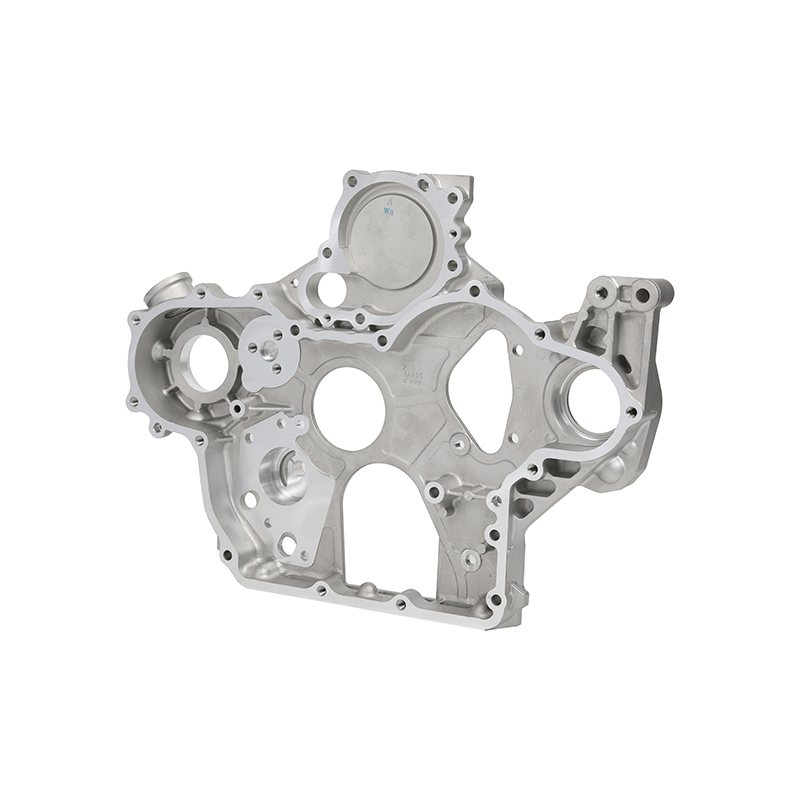
Every hardware project eventually faces a critical crossroad during material selection. Choosing the right alloy dictates whether your product thrives in the market or drowns in manufacturing overhead. Selecting the wrong die casting alloy does not just impact part performance. It creates compounded downstream costs, including premature tooling wear, excessive secondary machining, and compromised product lifecycles. There is no universally superior metal. The choice between aluminum and zinc hinges on a strict mathematical balance. You must carefully weigh production volume against structural requirements and tooling budget. This article provides a comprehensive technical and commercial evaluation framework. We aim to help engineering and procurement teams finalize their alloy selection. By understanding these key material differences, you will learn how to move confidently into the Design for Manufacturing (DFM) phase. This ensures better performance and higher manufacturing efficiency for your components.
Key Takeaways
Aluminum dominates when lightweight strength, thermal stability, and high operating temperatures are non-negotiable.
Zinc is unmatched for complex, thin-walled geometries, near-net-shape precision, and significantly longer tooling lifespans.
Alloy selection directly dictates Die Casting mold design; changing materials mid-project often requires entirely new tooling.
Defining the Success Criteria for Your Component
You cannot select a metal without first isolating the environmental and mechanical demands of the final product. Engineers must evaluate physical constraints before considering production economics. Establishing these baselines early prevents costly redesigns later in the development cycle.
Performance Requirements First
You must establish the non-negotiable physical constraints of your component. Ask specific questions about the end-use environment. Is the part load-bearing? Will it operate in high-temperature environments near engines or heat-generating electronics? Does it require strict EMI/RFI shielding to protect internal circuitry?
If a part faces constant mechanical stress, tensile strength becomes paramount. Components operating above 100°C require materials resisting thermal creep. Electronic enclosures often demand excellent inherent shielding properties. You must document these exact mechanical load requirements and thermal limits. These numbers create a strict filtering mechanism for alloy selection.
Production Volume and Tooling ROI
Expected production quantities drastically shift the financial math behind material selection. You must evaluate the initial tooling budget alongside expected annual usage. High volumes heavily favor certain alloys due to reduced tool wear.
If you plan to manufacture 500,000 units annually, mold longevity becomes your primary financial driver. Replacing a worn steel mold halts production and requires heavy capital investment. Conversely, if your project only requires 10,000 units over its entire lifespan, tooling deterioration matters much less. You should calculate the amortized mold cost per unit to make an informed decision.
Cosmetic and Finishing Needs
The end-use environment directly dictates surface finishing requirements. You must clarify whether the part requires electroplating, painting, or bare-metal aesthetics. Consumer-facing products often demand flawless cosmetic finishes. Internal structural brackets usually skip expensive secondary coatings.
Some metals readily accept decorative finishes like chrome plating with minimal surface preparation. Others require extensive chemical conversion or anodizing to achieve similar aesthetic results. Your cosmetic requirements will significantly influence both the material choice and the secondary processing timeline.
Aluminum Die Casting: Maximizing Strength-to-Weight
Aluminum remains the undisputed champion for applications demanding structural integrity without unnecessary bulk. Industries like automotive, aerospace, and portable electronics rely heavily on this material. Standard alloys like A380 and A383 offer an exceptional balance of mechanical properties and castability.
Core Advantages
Excellent strength-to-weight ratio: Aluminum provides robust structural support while keeping the overall assembly incredibly light. This characteristic proves vital for fuel efficiency in vehicles and portability in handheld devices.
High operating temperature tolerance: Aluminum maintains its dimensional stability and mechanical strength at elevated temperatures. It also features superior thermal conductivity. Engineers frequently specify aluminum for heatsinks, engine blocks, and LED lighting enclosures.
Lower raw material cost per volume: Aluminum is significantly less dense than competing metals. You get more cubic inches of material per pound. This raw material efficiency often results in a lower per-unit cost for larger, bulky components.
Implementation Realities and Limitations
Despite its widespread adoption, aluminum presents specific manufacturing challenges. The metal possesses a high melting point, typically around 660°C (1220°F). Injecting molten metal at this temperature causes rapid thermal fatigue on standard H13 steel molds. This intense thermal shock causes microscopic cracks in the die surface over time. Consequently, overall tool life decreases. Aluminum molds typically require replacement or major refurbishment after 100,000 to 150,000 shots.
Furthermore, aluminum requires a cold-chamber process. In this method, a robotic ladle transfers the molten metal from a holding furnace into the injection sleeve. A plunger then forces the metal into the die. This transfer step adds seconds to the cycle time. While a few seconds seem trivial, they compound significantly over high-volume production runs.
Aluminum is also inherently susceptible to internal porosity. Air can easily become trapped in the mold during the high-speed injection phase. Preventing these voids requires rigorous flow analysis and meticulous gate engineering during the initial Die Casting mold design phase. Failure to optimize the tool design leads to weak parts and high scrap rates.
Zinc Die Casting: Precision, Speed, and Tooling Longevity
When precision, intricate detail, and long-term production consistency matter most, zinc takes the lead. Alloys like Zamak 3 and Zamak 5 provide unparalleled casting fluidity. Engineers rely on zinc for complex connectors, hardware mechanisms, and miniature structural components.
Core Advantages
Zinc alloys melt at much lower temperatures, typically between 380°C and 420°C (716°F to 788°F). This lower melting point allows manufacturers to utilize the hot-chamber process. The injection mechanism sits permanently submerged within the bath of molten metal. When the machine cycles, a gooseneck mechanism immediately injects the metal directly into the die. This automated internal delivery yields significantly faster cycle times. You can often produce parts twice as fast as cold-chamber alternatives.
The lower processing temperature also translates to exceptional tooling lifespan. Molds experience virtually zero thermal shock. A well-maintained steel die running zinc can easily exceed one million shots without significant degradation. This dramatically lowers the amortized mold cost per unit for high-volume programs.
Finally, zinc offers superior castability. The metal flows like water into microscopic mold cavities. This fluidity allows engineers to design incredibly thin walls, highly complex geometries, and exceptionally tight draft angles. You can achieve near-net-shape parts directly from the machine. This precision drastically reduces or entirely eliminates the need for expensive secondary machining operations.
Implementation Realities and Limitations
The most prominent drawback of zinc is its density. Zinc is roughly two and a half times heavier than aluminum by volume. This added mass completely disqualifies it for weight-sensitive applications. If you are designing an aerospace bracket or a wearable device, zinc will likely exceed your weight budget.
Zinc also exhibits lower tensile strength at elevated temperatures. The metal experiences structural creep when exposed to sustained heat. Therefore, it remains unsuitable for parts operating consistently above 100°C (212°F). You should never specify zinc for high-heat engine components or heavy-duty industrial heatsinks.
Additionally, zinc carries higher raw material costs by weight. Because the material is so dense, a single part consumes more pounds of metal compared to a geometrically identical aluminum part. You can offset this higher material expense only if your production volume justifies the massive savings generated by extended tooling life and faster cycle times.
Head-to-Head Evaluation Matrix: Aluminum vs. Zinc
Comparing these materials directly helps clarify the engineering tradeoffs. The following sections break down the specific differences across tooling, tolerances, finishing, and compliance.
Tooling Cost and Lifespan
Tooling deterioration dictates long-term production budgets. Cold-chamber tooling for aluminum degrades quickly due to high thermal stress. Manufacturers must budget for tool replacements every 100k-150k shots. This replacement frequency drives up long-term capital expenditure.
Conversely, hot-chamber tooling for zinc experiences minimal thermal fatigue. These molds easily surpass one million shots. If you run a high-volume program over several years, a single zinc die will outlast five or six aluminum dies. This longevity offers massive financial leverage at scale.
Dimensional Tolerances
Zinc achieves much tighter as-cast tolerances than its counterparts. Because the metal shrinks less and cools predictably, manufacturers can hold critical dimensions directly out of the mold. It easily supports internal threads and intricate gear teeth.
Aluminum shrinks more aggressively as it cools. While modern casting achieves excellent accuracy, aluminum often requires secondary CNC machining to hit extremely tight tolerances. Adding a CNC turning or milling operation adds cycle time and increases the final piece price.
Surface Finishing Compatibility
Post-processing requirements differ wildly between the two metals. You must match the material to your intended cosmetic or functional coating.
Zinc: Readily accepts decorative electroplating. You can easily apply chrome, nickel, or brass plating with minimal surface preparation. This makes it ideal for bathroom hardware, automotive trim, and premium consumer goods.
Aluminum: Better suited for protective finishes. It responds excellently to anodizing, powder coating, and passivation. Electroplating aluminum is possible but requires complex, expensive chemical preparation steps to strip its natural oxide layer.
Environmental and Compliance Considerations
Both metals are highly recyclable, which supports global sustainability initiatives. Scrap material from the casting process easily melts down for reuse. When evaluating compliance, you must pay attention to alloy additives. Standard aluminum and zinc alloys comply with RoHS and REACH regulations. However, you should always verify the exact chemical composition with your supplier. Ensure no restricted elements, like lead or cadmium, exist in trace amounts within the specific ingot batch.
Evaluation Criteria
Aluminum Die Casting
Zinc Die Casting
Manufacturing Process
Cold-chamber
Hot-chamber
Expected Tooling Lifespan
100,000 - 150,000 shots
1,000,000+ shots
Weight / Density
Lightweight (approx. 0.098 lbs/in⊃3;)
Heavy (approx. 0.24 lbs/in⊃3;)
Thermal Conductivity
Excellent (Ideal for heatsinks)
Moderate
Wall Thickness Limits
Standard (Usually >0.060 inches)
Ultra-thin (Can achieve <0.025 inches)
Optimal Surface Finishes
Anodizing, Powder Coating
Electroplating (Chrome/Nickel)
Risk Mitigation: Vetting Your Die Casting Service
Choosing an alloy represents only half the battle. Executing the production run requires a capable manufacturing partner. You must thoroughly vet your chosen facility to prevent costly production delays and quality escapes. A rigorous evaluation protects your project timeline.
The Role of DFM Expertise
A qualified Die Casting Service must prove their engineering capabilities upfront. They should not blindly accept your CAD file. Instead, they must conduct a thorough Design for Manufacturing (DFM) review. This includes running advanced mold-flow and thermal simulations. Software tools predict exactly how the molten metal fills the cavity. This preemptive analysis highlights potential air traps, prevents shrinkage, and eliminates gas porosity before the manufacturer cuts any steel.
Quality Control and Traceability
You must evaluate a partner’s internal testing protocols. Do not assume high quality; demand proof. Modern Die Casting requires strict dimensional and structural validation. Ask about their inspection equipment.
X-ray Inspection: Crucial for identifying internal voids, cracks, or porosity hidden beneath the surface of the cast part.
CMM Dimensional Reporting: Coordinate Measuring Machines verify the part matches the exact geometric tolerances specified in your 2D drawings.
Spectrometer Verification: Ensures the raw material chemistry strictly matches the required alloy specifications, preventing contamination.
Scalability Readiness
Finally, assess whether the manufacturer can handle project growth. Transitioning from single-cavity prototype tooling to multi-cavity high-volume production introduces complex thermal dynamics. A reliable partner manages this transition smoothly. They ensure part quality remains consistent regardless of whether they produce one hundred units or one million units per month.
Conclusion
Choosing the correct alloy dictates the long-term success and profitability of your hardware project. Your final decision should rely on a clear, pragmatic assessment of your component's physical requirements and your expected production volumes.
Default to Aluminum if your application is weight-sensitive, operates in high heat, requires superior heat dissipation, or features a relatively large footprint.
Default to Zinc if you need intricate details, exceptionally tight tolerances, extensive electroplating, and plan to run volumes high enough to benefit from extended tool life.
Your next step requires decisive action. Finalize your 3D CAD models and document your expected annual usage (EAU). Outline your specific mechanical load requirements and operating temperatures. Submit this comprehensive data package to your manufacturing partner for a formal DFM review. This proactive approach eliminates guesswork, secures your budget, and ensures a flawless transition into mass production.
FAQ
Q: Can I use the same die casting mold design for both aluminum and zinc?
A: No. The shrinkage rates, gating, and thermal requirements are entirely different. Molds are engineered specifically for the thermal properties of the chosen alloy. Switching metals requires cutting an entirely new steel tool optimized for the new material's flow characteristics.
Q: Which material is more cost-effective?
A: It depends on volume. Aluminum is cheaper per cubic inch of raw material, lowering the piece price for bulky parts. However, zinc offers faster cycle times and dramatically longer tooling life, making it significantly cheaper at a massive manufacturing scale.
Q: Does zinc or aluminum provide better EMI/RFI shielding?
A: Both provide excellent inherent shielding to protect internal electronics. However, zinc's superior castability allows it to be cast much thinner. This characteristic often makes zinc the preferable choice for designing compact, tightly packed electronic enclosures.