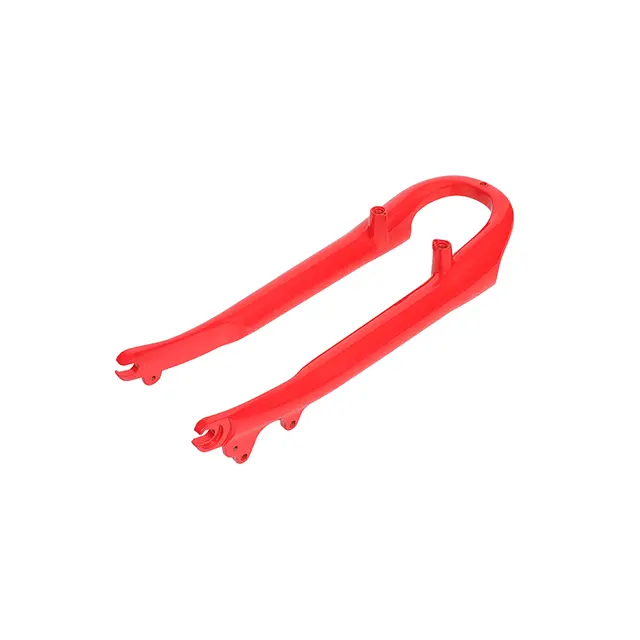
A bicycle is a marvel of engineering simplicity and mechanical efficiency. What appears to be a basic frame with two wheels is actually a carefully engineered assembly of dozens of components working in harmony. Whether you are a cycling enthusiast, a manufacturer, or simply curious about how bikes work, understanding the various bicycle parts is essential. From the frame that provides structure to the wheels that enable motion, every component plays a critical role. This comprehensive guide explores all the major bicycle parts, with special attention to Bicycle Front Fork—a component where lightweight aluminum alloy die casting has revolutionized performance and durability.
The Frame: The Heart of the Bicycle
The frame is the foundation upon which all other bicycle parts are mounted. It determines the bike’s geometry, handling characteristics, and overall strength.
Frame Materials
Modern bicycle frames are constructed from various materials:
Aluminum alloy: Lightweight, stiff, and affordable—the most common choice for mid-range and performance bikes
Carbon fiber: Extremely lightweight with excellent vibration damping
Steel: Durable, comfortable, and repairable
Titanium: Lightweight, corrosion-resistant, and exceptionally durable
For manufacturers seeking precision and strength, customized metal high pressure precision die casting parts Bicycle Frame offer an excellent balance of weight reduction and structural integrity.
Frame Components
The frame consists of several tubes joined together:
Top tube: Runs horizontally from the head tube to the seat tube
Down tube: Angled tube from the head tube to the bottom bracket
Seat tube: Vertical tube housing the seat post
Head tube: Front vertical tube that houses the headset and connects to the Bicycle Front Fork
Chain stays: Lower rear tubes connecting the bottom bracket to rear dropouts
Seat stays: Upper rear tubes connecting the seat tube to rear dropouts
Dropouts: Slotted ends where wheels attach
The Steering System: Front End Components
The steering system allows the rider to control direction and absorb road impacts.
Bicycle Front Fork
The Bicycle Front Fork is one of the most critical bicycle parts for handling, comfort, and safety. It connects the front wheel to the frame, allows steering, and absorbs road shocks.
Bicycle Front Fork designs vary by bicycle type:
Fork Type
Description
Best For
Rigid Fork
No suspension; lightweight and efficient
Road bikes, urban bikes, track bikes
Suspension Fork
Includes damping mechanism; absorbs impacts
Mountain bikes, gravel bikes, hybrid bikes
Tapered Fork
Wider at crown for increased stiffness
Performance road and mountain bikes
Straight Blade Fork
Simple design with straight legs
Road bikes, touring bikes
Modern manufacturing has transformed Bicycle Front Fork production. Lightweight Aluminum Alloy Die Casting Parts Bicycle Front Fork offers significant advantages over traditional steel fabrication:
Weight reduction: Aluminum alloy forks are substantially lighter than steel alternatives
Design complexity:Die casting enables complex shapes that optimize strength-to-weight ratios
Consistency: Each fork meets precise dimensional specifications
Aesthetic options: Clean lines and smooth surfaces straight from the mold
For custom applications, customized aluminum precision die casting Parts Bike Front Fork allows manufacturers to create forks tailored to specific bicycle geometries and performance requirements. High Pressure Aluminum Die Casting Parts Bicycle Front Fork ensures superior material density and structural integrity, critical for safety-critical components.
Fork Components
A Bicycle Front Fork consists of:
Steerer tube: The vertical tube that passes through the head tube and connects to the stem
Crown: The curved section connecting the steerer tube to the fork legs
Fork legs: The two blades extending downward to the wheel axle
Dropouts: Slotted ends where the front wheel attaches
Headset
The headset is the bearing assembly that allows the Bicycle Front Fork to rotate smoothly within the head tube. It consists of bearings, cups, and compression rings that provide steering precision without play or binding.
Stem
The stem connects the handlebars to the steerer tube of the Bicycle Front Fork. Stems vary in length and angle, affecting rider position and handling characteristics.
Handlebars
Handlebars provide steering leverage and rider positioning. Common types include:
Drop bars: Curved bars typical on road bikes
Flat bars: Straight bars common on mountain and hybrid bikes
Riser bars: Slightly raised bars for comfortable upright position
Aero bars: Extended bars for aerodynamic riding positions
The Drivetrain: Power Transmission System
The drivetrain converts the rider’s pedaling into forward motion.
Crankset and Bottom Bracket
The crankset includes the crank arms and chainrings. The bottom bracket houses bearings that allow the crankset to rotate smoothly within the frame.
Pedals
Pedals provide the interface between the rider’s feet and the drivetrain. Options include flat pedals, clipless pedals, and platform pedals.
Chain
The chain transfers power from the crankset to the rear wheel. Chains are sized to match the number of rear gears and require regular maintenance for optimal performance.
Cassette or Freewheel
The cassette is the cluster of gears mounted on the rear wheel. More gears provide a wider range of resistance options for varying terrain.
Derailleurs
Derailleurs move the chain between gears:
Front derailleur: Moves the chain between chainrings
Rear derailleur: Moves the chain across the cassette
Shifters
Shifters are controls mounted on the handlebars that allow the rider to change gears. Types include trigger shifters, grip shifters, and integrated brake-shift levers.
The Braking System: Stopping Power
Brakes are essential safety bicycle parts that provide controlled stopping power.
Tubeless compatibility: Allows sealant use for self-sealing punctures
The Saddle and Seat Post: Rider Support
The saddle and seat post support the rider in a comfortable, efficient position.
Saddle
Saddles vary in width, padding, and shape to accommodate different riding positions and anatomy. Performance saddles are narrow and firm; comfort saddles are wider with more padding.
Seat Post
The seat post attaches the saddle to the frame and allows height adjustment. Seat post types include:
Rigid post: Simple, lightweight, fixed
Suspension post: Includes damping for comfort on rough terrain
Dropper post: Adjustable height via lever control; popular for mountain bikes
Additional Bicycle Parts and Accessories
Headset Spacers
Spacers adjust handlebar height by positioning the stem at different points on the steerer tube.
Grips or Bar Tape
Handlebar grips provide traction and vibration damping. Bar tape is wrapped around drop bars; grips slide onto flat bars.
Cables and Housing
Brake and shift cables transmit lever inputs to calipers and derailleurs. Cable housing protects and guides the inner cable.
Bottle Cages
Mounted to the frame, bottle cages hold water bottles for hydration during rides.
Fenders and Racks
Accessories that enhance utility: fenders protect from road spray; racks carry cargo or panniers.
Materials in Bicycle Parts Manufacturing
Modern bicycle parts leverage advanced manufacturing techniques to optimize weight, strength, and cost.
Manufacturing Method
Application
Advantages
Aluminum Die Casting
Bicycle Front Fork, frame components, brake levers
Complex shapes, consistent quality, lightweight, cost-effective for volume
Forging
Crank arms, stems, pedal bodies
Superior strength, grain alignment, impact resistance
For manufacturers seeking high-quality bicycle parts, Lightweight Aluminum Alloy Die Casting Parts Bicycle Front Fork represents the ideal combination of performance and manufacturing efficiency. Domestic customized precision aluminum die casting Bicycle Front Fork allows for design optimization tailored to specific bicycle geometries and riding applications.
Quality Considerations for Bicycle Parts
When sourcing bicycle parts, particularly safety-critical components like the Bicycle Front Fork, manufacturers should consider:
Material certification: Verified alloy composition ensures consistent mechanical properties
Dimensional accuracy: Precision tooling and inspection guarantee proper fit
Strength testing: Components should meet or exceed industry standards
Surface finish: Smooth surfaces reduce stress concentrations and improve aesthetics
Process control: Consistent manufacturing processes ensure batch-to-batch reliability
Frequently Asked Questions
Q: What is the most important part of a bicycle? A: Every bicycle component serves a critical function, but the frame and Bicycle Front Fork form the structural foundation. A failure in either compromises safety and handling. The Bicycle Front Fork is particularly important as it connects the front wheel to the frame and absorbs steering loads and road impacts.
Q: How are modern bicycle front forks made? A: Many modern Bicycle Front Fork components are produced through aluminum die casting, which allows for complex, lightweight designs with consistent quality. Lightweight Aluminum Alloy Die Casting Parts Bicycle Front Fork offer excellent strength-to-weight ratios and can be customized for specific bicycle applications.
Q: What should I look for in quality bicycle parts? A: Quality bicycle parts feature consistent dimensions, smooth surfaces, proper material specifications, and reliable joining methods. For components like the Bicycle Front Fork, look for precision casting with uniform wall thickness and accurate dropout alignment.
Conclusion
Understanding the various bicycle parts—from the frame that provides structure to the Bicycle Front Fork that enables precise steering—helps cyclists make informed choices and manufacturers deliver reliable products. Whether you need Lightweight Aluminum Alloy Die Casting Parts Bicycle Front Fork or other precision bicycle components, working with an experienced manufacturer ensures quality and performance.
Altop Precision Die Casting Co., Ltd. specializes in customized aluminum precision die casting Parts Bike Front Fork and other bicycle parts, backed by over 21 years of manufacturing expertise. Contact engineering teamto discuss your Bicycle Front Fork or other bicycle component requirements.